
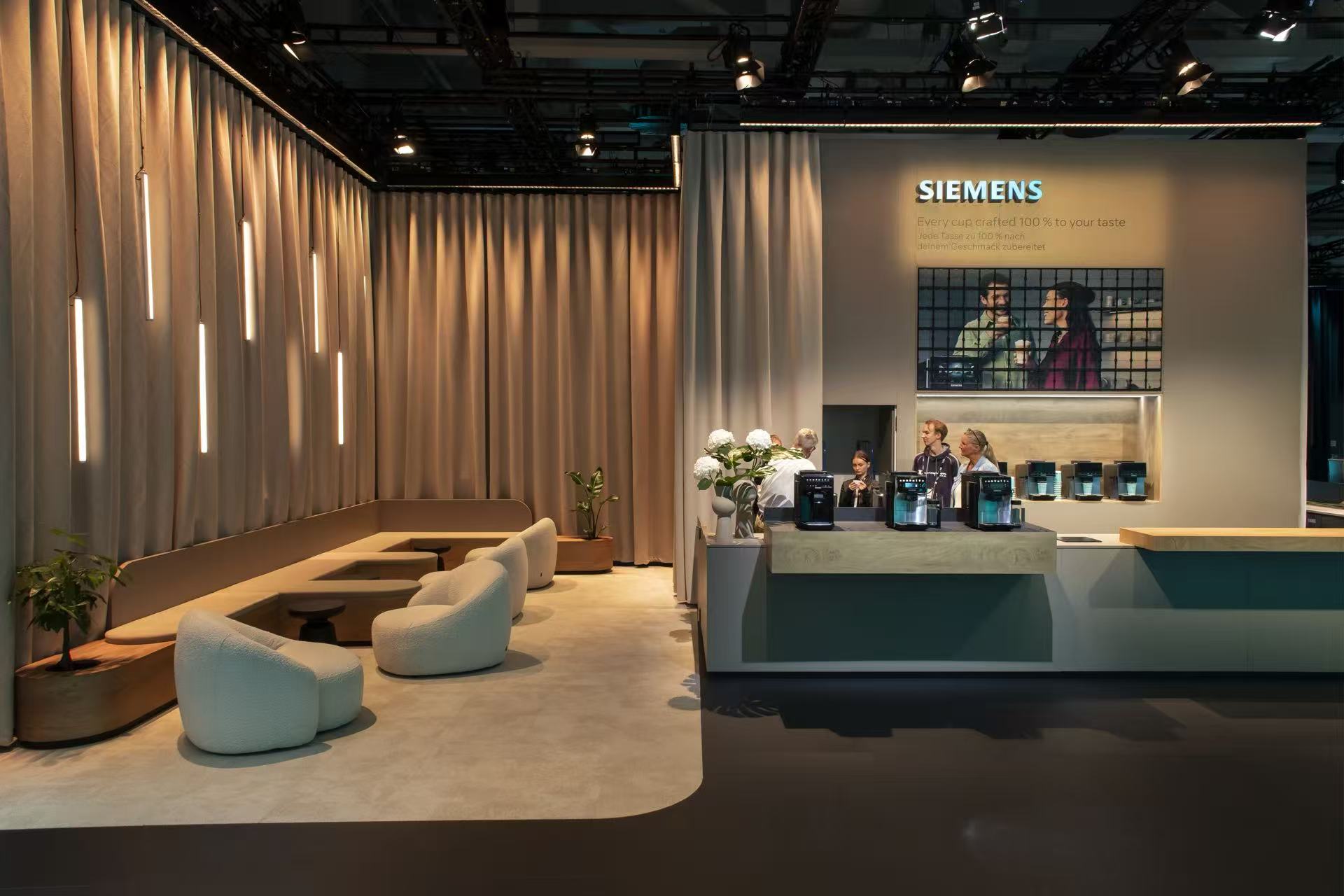
A 96-module mechanical Picture Flap installation created for the Siemens Home Appliances exhibition space at IFA Berlin 2026
TS Display produced a custom 6 × 16 Picture Flap Display with 96 mechanical modules for the Siemens Home Appliances booth at IFA Berlin 2026.
The project evolved from an original 4 × 8 layout using 30 × 30 cm modules to a denser 20 × 15 cm configuration. The overall display area remained unchanged, while the number of independently moving modules increased from 32 to 96, creating finer graphic detail and a more dynamic mechanical effect for the exhibition environment.
Project Information
Location: Berlin, Germany
Event: IFA Berlin 2026
Brand Application: Siemens Home Appliances
Application: Exhibition Booth / Trade Show Display
Product: Picture Flap Display
Date: September 2026
Manufacturer: TS Display
Booth: Hall 1.1 · H1.1-101
Official Reference: Siemens Official IFA 2026 Press Release
Picture Flap Display Specifications
Module Size: 20 cm (H) × 15 cm (W) × 20 cm (D)
Layout: 6 Rows × 16 Columns
Total Modules: 96
Overall Display Size: 120 cm (H) × 240 cm (W)
Display Content: Customized Siemens graphics
Control: TS Display software with pre-programmed graphic and flipping sequences
Installation: Integrated into the exhibition booth wall
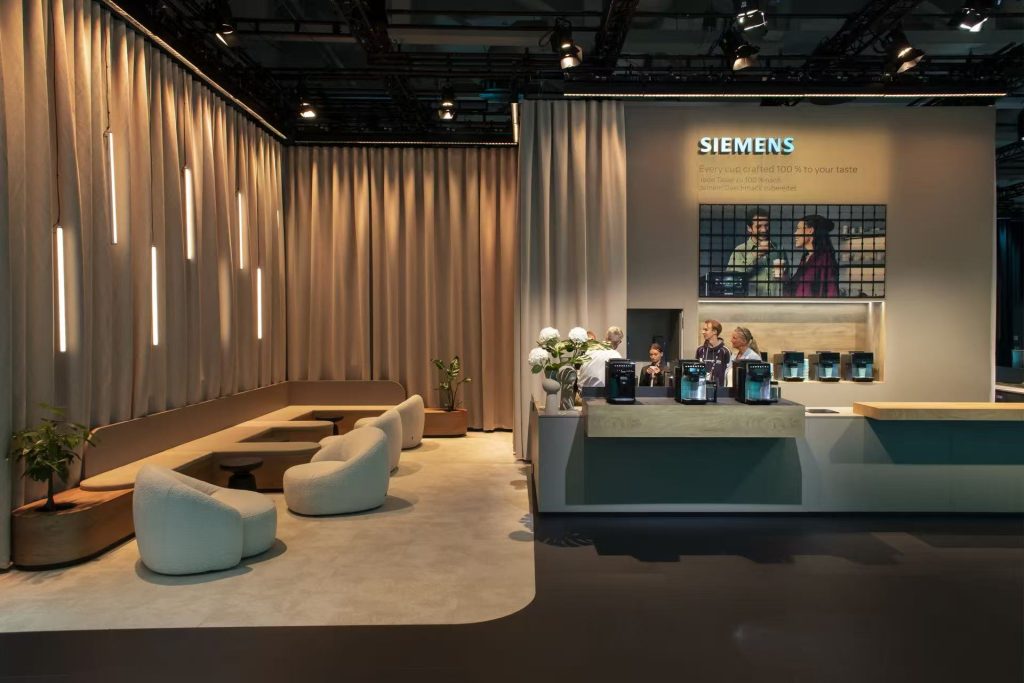
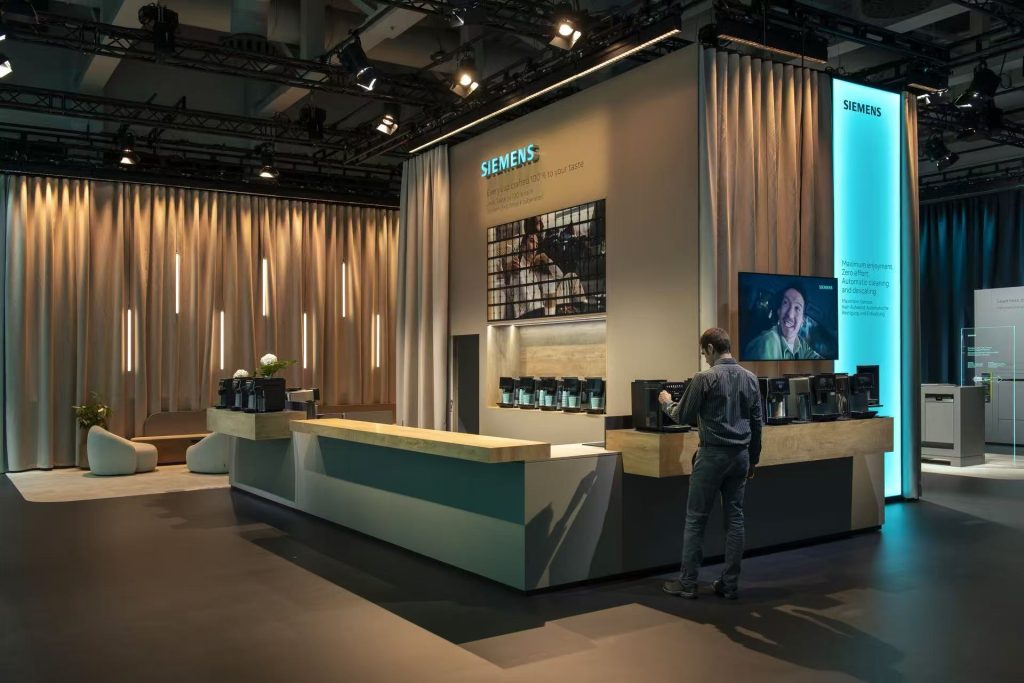
The completed Picture Flap Display was integrated into the Siemens Home Appliances exhibition space at IFA Berlin 2026, one of the world’s major consumer electronics and home appliance exhibitions.
From Exhibition Concept to Final Module Selection
In early June 2026, an architectural design team in Germany approached TS Display while developing a visual installation for the Siemens Home Appliances booth at IFA Berlin.
The original concept was based on our 30 × 30 cm Picture Flap modules, arranged as:
4 rows × 8 columns = 32 modules
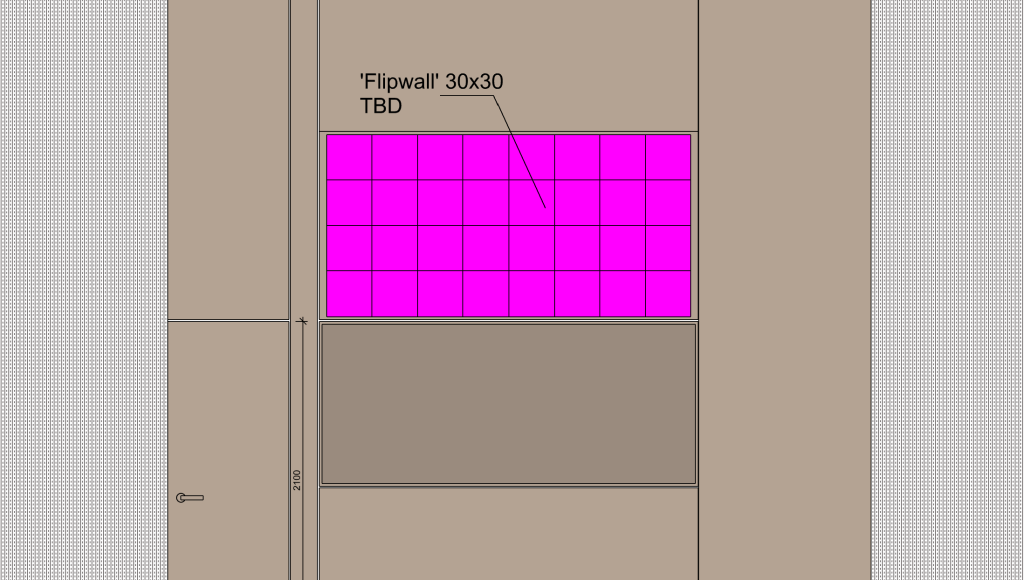
This configuration created an overall display size of:
120 cm high × 240 cm wide
During the design development process, the project team reviewed the different Picture Flap module sizes available from TS Display:
15 × 10 cm
20 × 15 cm
30 × 30 cm
As the concept developed, the focus shifted toward achieving finer graphic detail and a stronger sense of mechanical movement within the same exhibition wall area.
The 20 × 15 cm Picture Flap module was therefore selected for the final installation.
The new configuration became:
6 rows × 16 columns = 96 modules
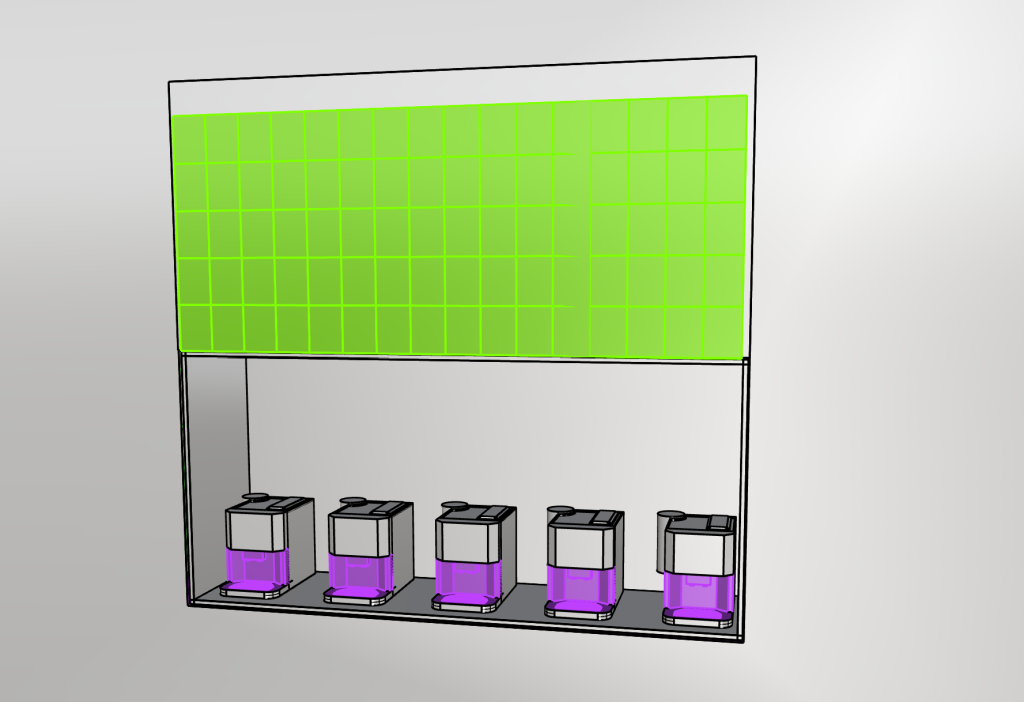
The overall dimensions remained exactly the same:
120 cm × 240 cm
But the number of independently moving mechanical modules increased from 32 to 96.
Same Display Area, Different Visual Experience
The change in module size played an important role in the final visual result.
A larger 30 × 30 cm Picture Flap module creates a bold and architectural appearance. With fewer divisions across the surface, large graphics retain stronger visual continuity and the overall image feels more unified.
A smaller 20 × 15 cm module, however, allows significantly more moving elements to occupy the same display area.
With 96 individual modules turning in coordinated sequences, the mechanical movement becomes more pronounced and the transitions between graphics become a stronger part of the visual experience.
Neither format is inherently better.
They create different design effects.
For the Siemens IFA installation, the project called for greater movement and finer graphic definition, making the 20 × 15 cm configuration particularly suitable for the exhibition environment.
This flexibility is one of the advantages of a modular Picture Flap Display: the same architectural space can create very different visual results depending on module size, layout and programmed movement.
Design, Graphics and Software Programming
Once the final configuration was confirmed, the project teams held a video meeting to review the technical and creative details of the installation.
The discussion covered the Picture Flap layout, artwork, flipping sequences, software control, production schedule, international transportation and installation requirements.
For this project, the Picture Flap Display was not intended simply to switch between static images.
The movement itself was part of the design.
TS Display programmed the display according to the graphic sequence and transition concept developed for the Siemens exhibition space.
The 96 modules could therefore move in coordinated patterns, allowing each transition to become part of the visual presentation rather than simply a change from one image to another.
Through customized flap printing and software programming, the original design concept was transformed into a physical sequence of mechanical movement.
This is one of the key differences between a Picture Flap Display and a conventional digital exhibition screen: the transition itself becomes part of the experience.
Production and Factory Testing
After the final artwork was supplied, our team completed the image layout, flap printing, module preparation and software programming.
The complete 6 × 16 Picture Flap Display was then assembled and tested as one system in the TS Display workshop before shipment.
Instead of testing only individual modules, the entire 96-module installation was operated using the actual graphics and flipping sequences prepared for the exhibition.
This allowed the complete visual effect to be reviewed before the display left our factory.
The factory test confirmed that the graphics, mechanical transitions and software programming worked together as intended, allowing the finished system to move directly into the delivery stage.
For exhibition projects with fixed opening dates, this type of pre-shipment testing is particularly valuable. The visual programming and system configuration can be completed in advance, reducing the amount of work required at the exhibition venue.
International Shipping and Local Installation
After testing, the Picture Flap modules were securely packed and shipped by international express directly to Berlin.
The complete system arrived before the exhibition installation period and was assembled locally using the installation documentation provided by TS Display.
Once connected and powered on, the Picture Flap Display automatically ran the graphic sequences and mechanical transitions that had already been programmed and tested at our factory.
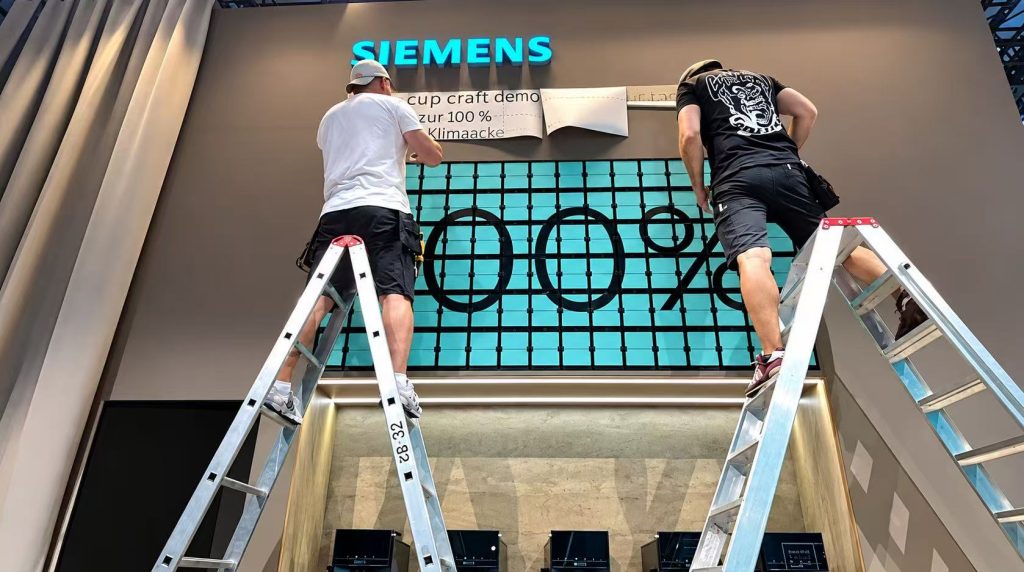
No remote commissioning from TS Display was required during the installation.
The project demonstrated that even a 96-module Picture Flap exhibition display can be configured in advance, transported internationally and installed successfully by a local exhibition team without requiring a TS Display technician on site.
This modular approach is particularly practical for international exhibitions, where installation schedules are often short and on-site working time is limited.
Picture Flap Display at IFA Berlin 2026
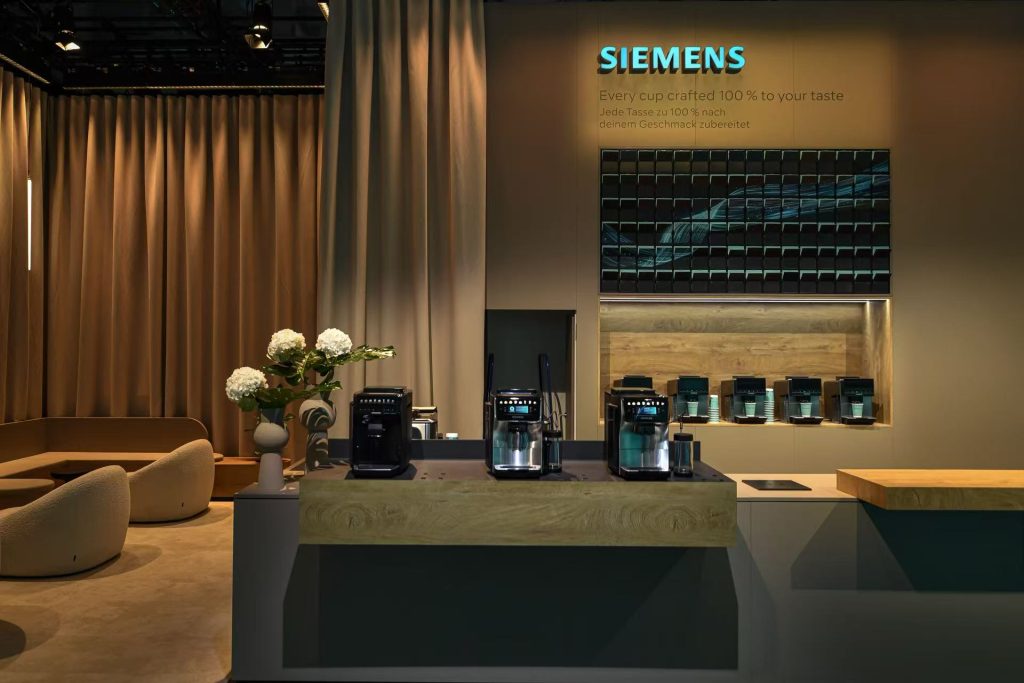
The completed Picture Flap Display was integrated into the Siemens Home Appliances exhibition environment above a presentation area featuring Siemens coffee machines.
The installation worked naturally with the surrounding booth architecture.
The black mechanical modules complemented the darker finishes of the appliances, while the changing graphics introduced movement into a space defined by clean architectural lines, lighting and carefully presented products.
Importantly, the Picture Flap Display did not appear as a separate piece of equipment added after the booth had been designed.
It became part of the exhibition architecture.
That distinction is especially important in premium brand environments.
An exhibition display needs to attract attention, but it must also respect the visual identity of the brand and the design language of the space around it.
Why Picture Flap Displays Work for Exhibitions
Exhibitions and trade shows are particularly suitable environments for mechanical flap displays.
Modern exhibition halls are filled with LED walls, LCD screens and conventional digital signage. Against that background, real mechanical movement creates a distinctly different visual experience.
A Picture Flap Display does more than show an image.
Visitors can physically see the surface transform as individual modules turn from one graphic to another.
The movement, changing surface and mechanical character naturally attract attention, making Picture Flap technology particularly suitable for:
Exhibition Booths
Trade Shows
Product Launches
Brand Activations
Pop-Up Installations
Experiential Retail Spaces
Its modular construction also makes it practical for exhibition projects.
The display can be designed around a specific wall area, programmed and tested before shipment, transported internationally and integrated into the booth by the local installation team.
The Siemens IFA project demonstrates this combination clearly:
custom graphics, mechanical movement, software control, modular construction and exhibition architecture.
Result
The completed Picture Flap Display became a natural part of the Siemens exhibition environment at IFA Berlin 2026.
Its mechanical movement introduced visual energy into the booth while remaining consistent with the surrounding products, materials and architecture.
The project demonstrates how a customized Picture Flap Display can move efficiently from initial architectural concept through module selection, graphic preparation, software programming, factory testing, international transportation and local installation.
It also shows why mechanical flap displays are particularly well suited to exhibition environments.
They do more than present branded imagery.
They turn the transition itself into part of the experience.
In the Siemens IFA installation, the final Picture Flap Display did not feel added to the booth.
It felt designed as part of it.
Related Posts
Porsche Design 50th Anniversary Picture Flap Display Campaign
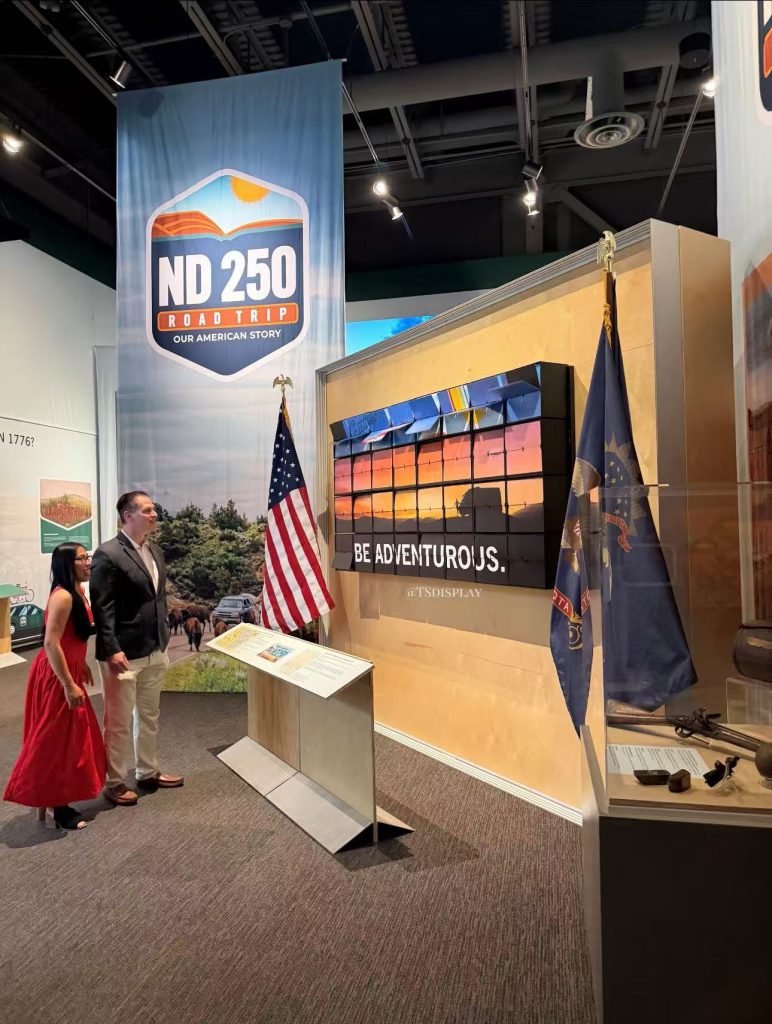
Picture Flap Display for North Dakota’s America 250 Exhibition

Split Flap & Picture Flap Displays for LASTCALL at Hamad International Airport